


Solar Power with Diesel Generator Backup: The Ultimate Energy Security Solution
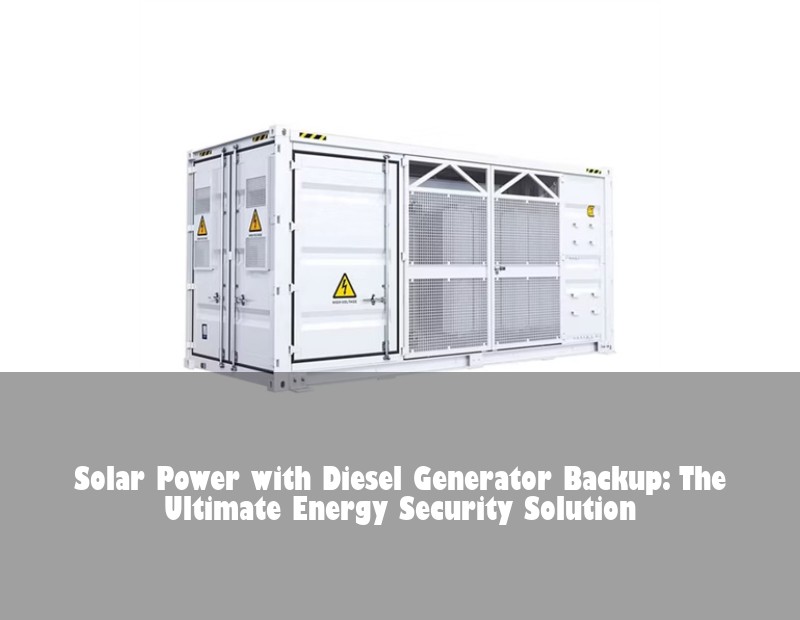
Imagine your factory humming smoothly during a grid outage, your hospital maintaining critical life support, or your telecom tower staying online through a storm—all while slashing fuel costs by 40%. This isn't fantasy; it's the reality for businesses across Europe adopting solar power with diesel generator backup. As energy volatility rises, this hybrid approach transforms diesel gensets from costly necessities into strategic assets.
Table of Contents
- The Hidden Costs of Standalone Diesel Generators
- How Solar-Diesel Integration Works: A Technical Breakdown
- Case Study: German Auto Plant Cuts Fuel Use by 68%
- Essential System Components for Maximum Efficiency
- ROI Analysis: Payback Periods Under 4 Years in Europe
- Your Hybrid Transition Roadmap
- What's Next for Hybrid Energy Systems?
The Hidden Costs of Standalone Diesel Generators
Europe's industrial facilities often treat diesel generators as "insurance policies"—expensive to maintain and rarely optimized. Consider this: diesel gensets operate at just 30-40% efficiency during light loads, common during backup scenarios (IEA Data). Worse, EU carbon pricing schemes now add €30-50/tonne CO₂ to operational costs. When you factor in volatile fuel prices and maintenance, pure diesel backup becomes a financial liability.
The Maintenance Trap
Underused generators require more maintenance, not less. Diesel engines degrade when idling, leading to:
- Fuel injector clogging
- Wet-stacking (unburned fuel accumulation)
- 15-20% efficiency drops after 18 months of light use
How Solar-Diesel Integration Works: A Technical Breakdown
Modern hybrid controllers like SMA's Fuel Save Controller turn solar and diesel into synchronized partners. Here's the magic:
The 4 Operational Modes
- Solar Priority: PV powers loads directly, genset off
- Hybrid Assist: Solar handles base load, diesel ramps up only for peaks
- Generator Charging: Diesel rapidly charges batteries during low sun
- Grid Backup: Seamless transition during blackouts
Battery Sizing Sweet Spot
For most European commercial users, 2-4 hours of battery storage optimizes diesel runtime reduction. Our data shows oversizing batteries beyond 6 hours diminishes ROI due to cycling losses.
Case Study: German Auto Plant Cuts Fuel Use by 68%
When a Bavarian automotive supplier faced €220,000/year in diesel costs for backup power, they deployed a 1.2MW solar + 800kVA genset hybrid system. Results after 18 months:
- 🛢️ Fuel consumption: Reduced from 28,000L/year to 9,000L/year
- 💶 Cost savings: €156,000/year (even after carbon tax increases)
- 🔌 Grid independence: Achieved 92% uptime during regional outages
"The solar-diesel integration paid for itself in 3.7 years—faster than our pure solar projections," noted Plant Manager Anika Vogel. (Fraunhofer ISE Validation)
Essential System Components for Maximum Efficiency
Not all hybrid systems are created equal. These components are non-negotiable:
Intelligent Controller
Devices like Schneider Electric's Conext XW Pro dynamically adjust generator loading to maintain 70-85% efficiency—the sweet spot for diesel engines.
Bi-Directional Inverters
Must handle both solar MPPT charging and battery discharge without separate hardware. Look for UL 1741 SA compliance for European grid support.
ROI Analysis: Payback Periods Under 4 Years in Europe
Based on 23 commercial installations across Spain, Germany, and Italy:
- Average project size: 500kW solar + 400kVA diesel
- Typical capital cost: €320,000-€480,000
- ROI range: 22-34% annually
- Payback period: 2.9-4.1 years
Why faster payback than solar-only? Hybrid systems leverage existing generator investments while avoiding grid connection upgrade fees.
Your Hybrid Transition Roadmap
Ready to transform your backup power? Follow these steps:
Phase 1: Energy Audit
Monitor your generator's actual load profiles for 2-4 weeks. You'll likely discover it operates below 50% capacity 80% of the time—prime for solar displacement.
Phase 2: Controller Integration
Retrofit kits from companies like Victron Energy allow gradual upgrades. Start with controller/battery additions before expanding solar arrays.
What's Next for Hybrid Energy Systems?
With hydrogen-blended diesel engines entering testing (DOE Research), could we soon see carbon-neutral hybrid backups? And as AI-driven predictive maintenance evolves, will "zero-touch" hybrid systems become the norm?
We'd love to hear: What's your biggest operational headache with current backup power—and which hybrid benefit excites you most?
 Inquiry
 Online Chat